AddThis

Friday, May 29, 2015

What is a Learner?


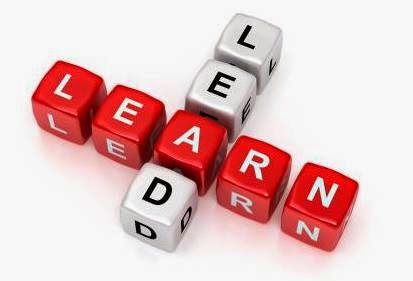
Last week I walked by Mrs. Eason's classroom and noticed that students were intensely paying attention to another student presenting. I couldn't help myself and had to see what was going on. Her 9th grade students were presenting speeches on the topic, "What is a Learner?" The first full speech that I had the opportunity to hear came from Hannah Faulkner. If there is anything I could compare her presentation to, it would be an evangelical preacher. I found myself wanting to shout "Amen" several times as she spoke. I asked for a copy of her speech so that I can share it with you. Here are a few excerpts:

"2,340. That's how many days you'll be in school from kindergarten to 12th grade. That's how long you have to plan the rest of your life."
"What is a Learner? Learners can often be overlooked, because they aren't always an A+ student...they work their way around [problems] and persevere."
"Now you probably expect me to list off a bunch of people who persevered to reach the top, but of what relevance are they to us? There's those people like Katie Eason, Rebecca Burris, Lillian Corbitt, Caroline Clark and Charlie Howell who are looked at as only teachers. But that's the thing, they are teachers. Without them, how would we develop into learners? They are the ones that can help us make something of ourselves."
"As a student, stay committed to molding into a learner and use every last minute of those 2,340 days. Whether it's the best times or the worst times, it's the only time you've got."

Here we have a student that is impacted in very very best way possible. She gets it, and that is 100% due to the support she has received from her teachers at Greene Central. As we begin testing for our students, it's nice to also know that while we can teach students to answer questions on our content, we are also teaching students to become real learners.

Friday, May 15, 2015

Going to College

This week Greene Early College held its graduation ceremony. I was asked by the graduating class to speak at their ceremony and proudly accepted. For this particular group of students, I was one of five principals that served at their school in five years. I joked in my message to them that they had probably been exposed to more leadership styles than most people twice their age. Despite that turnover, this group turned out to be one exceptional class of graduates from Greene County. Three students received full scholarships and the others assembled a collective scholarship offering of over $1.7 million. One student alone amassed $400,000 in offerings. That is pretty exceptional.

I strongly believe that the key ingredient in their success is an overwhelming quality that anyone quickly notices among this group. This group of students works together and celebrates each other.  I have honestly never seen another group of teenagers do this like they do it. The call each other a family and treat each other that way. They still have times of disagreement, but in that disagreement, they seek to find resolve. Maybe it's because they learned to depend on one another, or because they are such a small group and know each other so well. Whatever the reason, it is successful and I would love to learn how to replicate it.

At this point, most of our seniors know where they will be next year. They may have been accepted to a university or community college, and with those students, we were successful. This year we started the process of building a college-going culture and that is a long and arduous journey.  Next year, more students have selected honors, AP and community college classes than ever before and we will have the task of pulling them up to prepare them for those rigors. It will be tough, but I am already smiling because by simply making the choice to be there shows that they are beginning to think like college-bound students. If we can teach them to celebrate and support one another along the way, we can make them successful students, but more importantly, we will make them successful adults.

Friday, May 8, 2015

Teacher Appreciation

I hope by now that you have felt some appreciation from your students and colleagues this week. Teacher Appreciation Week is a great time to recognize those individuals that do a lot for students. Ironically, the qualities that teachers are often appreciated for may have little or nothing to do with instruction. Teachers are often appreciated for the relationships and expectations that they have for their students. Students appreciate the way that they make them feel as individuals much more than the knowledge they impart. I vividly remember loving a high school English teacher that taught me so much more than how to write. She set such high expectations for me as a student and as a young man. When I stepped out of line, she called me out quickly, sometimes even going to the point of taking off her shoe to throw at me! (Please do not follow her example on this!)

This job requires inspiration and many of us were inspired to work in education because of a teacher that we had in school. That person made us want to be like them. I am still inspired by many of you. I stand in awe of your positivity, your dedication and your relentless pursuit of achieving more from your students. Happy Teacher Appreciation Week and thank you for being an inspiration to students and adults alike.

Friday, May 1, 2015

Good Teaching is Like Pornography

A professor once told me that good teaching is like pornography; both are tough to define, but you definitely know it when you see it. We often want to simplify things so that they offer solutions for us in nice neat packages, but in arenas that rely on artful skill, it rarely works that way. Take the statue of David by Michelangelo for instance. Here is a fully nude man in an openly public place. If a person where to do that, it would be indecent and considered pornography, but because he is sculpted he becomes one of the greatest works ever and people take pictures with him. So where is the line between art and porn? It's tough to say and depends highly on the material and the audience.

Teaching is exactly the same; good teaching is anyway. It would be simple to say "just do this with your class and they will learn," but that will never hold true. Good teaching is highly dependent on the material and the audience. What works in one class, will bomb with another. What works one day, may fail tomorrow. The art is not in the execution of good teaching, but in recognizing what connects with the audience and delivering that. I recently visited Mrs. Lopez-Hodges's Spanish for Native Speakers II class and while I could only understand a little of what was being said during the observation, I knew that what I saw was good teaching. Students communicated with the teacher, responded to one another and through their mannerisms, I saw relationships, thinking, challenge and effort. I didn't need to understand it; I knew it, because I saw it.

Next week is Teacher Appreciation Week and I think that good teaching should not only be recognized by students, parents and administrators. Good teaching should be recognized by fellow teachers as well. If you have seen good teaching lately, let a fellow teacher know. It will mean a lot to them that a fellow artist has recognized great work.

Friday, April 24, 2015

Teacher Leadership

There is no doubt that I try to be a little liberal with how I choose to manage a school. There are some things that students and teachers do that I may not 100% agree with, but I try to recognize a human element to the organization. I believe that you can spend a lot of time focusing on managing that human element or your can spend that same amount of time improving instruction and student effectiveness. The fact is, I am always outnumbered. With almost 900 students and close to 70 staff members, I can never watch all the people, all the time. I rely heavily on teacher and student leadership to find an effective balance. Last week we met with student leaders and I wrote about what those students said to out board members. This week I want to discuss teacher leadership.

I recently saved an article that highlighted 7 habits of teacher leaders. The author identified the following:
1. Model lifelong learning
2. Engage in effective collaborative learning
3. Assume collective responsibility for student success
4. Support newer colleagues
5. Contribute to the schoolwide improvement agenda
6. Impact school system performance
7. Build relationships with policymakers

All of these attributes are necessary but they also require action. Most teachers, even new teachers, know what should be done. Taking the next step to actively do those things can be hard sometimes. But that's what makes a leader.

It's the time of year when we start doing summative evaluations and I wish that teacher leadership (Standard 1) was even more emphasized because it impacts so much of a school. In the spirit of preparing for those evaluations and preparing for a strong finish, take a few minutes to self-reflect on your contribution to those 7 habits. Where do you excel and where can you improve? When we have 70 teacher leaders, it greatly increases our odds of leading an effective school!

Friday, April 17, 2015

Wisdom That Still Works

I was welcomed back in full force this week! We had a lot of events and it instantly reminded me of how busy the end of the school year will be. That became even more interesting when I inadvertently sent out a virus to everyone on Monday! (If you ever want to know who  reads your emails, just send them a virus! You'll find out really quick!) After the stress of that first day, I was already exhausted.


On Tuesday afternoon, I was invited to the Greene County Senior Center to celebrate Mr. William Davis. Mr. Davis is a former assistant principal for Greene County Schools and recently celebrated his 100th birthday. I was amazed at this man. He spoke to us after his recognition and said something that I instantly thought was worth writing down. It may even be my new mantra. He said, "If you can impress students by showing them that you care for them; they will take care of you." How simple, but how true. I hear from people in and out of education about how schools and students are just not the same as they used to be, but here was a 100 year-old administrator that knows what worked then and what still works today.

That idea instantly proved true for me on Wednesday as we hosted our annual School Board Luncheon. This event gives our student leaders an opportunity to speak with members of the school board and county office about our school, changes they have seen and goals that they would like to see. I never think that I should coach them into saying what I want them to say. For me, this is an authentic assessment of how well I am doing and how well we are doing collectively. I was impressed to hear from our student leaders that they believe that our teachers have improved in how they teach and in how they interact with students. They see you pushing them and caring for them and they told the people that matter most in our profession. I instantly thought of Mr. Davis and his words of wisdom.

Student feedback can be formal and informal and you have to treat that as your formative check. Are you impressing them by taking care of them? How do you know? While this may not be the best evaluation for that kid that you call down every day, it probably is a great evaluation from the majority of your students. Work to impress them and they should be taking care of you. 100 years of experience says so.

Friday, March 27, 2015

Communication

When I first knew that I was coming to Greene Central I wanted to meet with Mr. Marr to talk with him about what I needed to know before making the transition. I came over one morning that summer and Tammy asked me what I was doing there. She's not a very good liar. She knew exactly why I was there. She knew because she's a great communicator. Since then, communication between Tammy, the assistant principals and myself has been a hallmark of our working relationship. We talk to one another a lot, often trading texts before 6:00 am. The only breakdown in communication comes when Tammy is trying to get me to read her lips in a crowded office. I'm horrible at reading lips and I have no clue what she is talking about!


Tammy Oakes has proven everyday that good communication can solve most problems. It's something that we can all learn from. Good phone calls home to parents when students do well and tough ones when they fail are essential. Communication between teachers helps you all feel better about what you do each day, and maybe makes you feel normal when things go wrong. I've recently seen great teacher sharing with the Honors Portfolios and it is something that I hope continues afterward.

On Tammy's last day with us, I want to say thank you to her on behalf of everyone for the multitude of problems that she has solved for all of us over the past 12 years. She has laughed with us on our best days and helped support us on our worst days. We will miss her greatly.