AddThis

Friday, April 1, 2022

Success

This week I had a chance to participate in the first of three "Portrait of a Graduate" meetings. These meetings are held between all types of community and school stakeholders and are designed to guide some conversation on what successful graduates from our schools can do. The first thing that jumps out at you in these meetings, is that we are assessing the absolute wrong skills of students today. Parents, businesses, and almost every other stakeholder said that they wanted students that were better communicators, better problem-solvers, and to be more civically minded. Unfortunately, we don't measure those things in a test at all. It's not something that you can bubble a sheet to figure out, and that doesn't work well for the people that measure schools. We spent some time starting to talk about what success for graduates today looks like and that conversation will be carried out in future meetings. It was a long first meeting, but I enjoyed it. 

During the meeting, I had to ignore a phone call from an unknown number. When I listened to the message, it was a business owner asking if I could be a reference for a former student that had listed me. Generally, I am happy for students that ask to use me as a reference, but I don't get many calls about it. It was late, so I returned the call the next day. The student in question was a girl that graduated in 2014. She had a baby her Senior year and didn't initially come back to school afterward. It took a lot of coordinated help throughout the district to get her to try to finish, but she agreed to come work in an empty room that was a part of the Pre-K center. Mrs. Davis and I took turns watching the baby, while the student finished the work necessary to pass the classes of her last semester. When she finished, I made her promise that she would work hard to be a great example for her little girl. It wasn't going to be easy for her, but something told me that she could do it. Since that time, I have kept up with this former student through social media. She shared her daughter's first day of school with me, and I always have enjoyed watching that little girl grow up in pictures. 

When I spoke to the employer, she told me that I was the only reference that she had listed. She asked about how she had been as a student. For some strange reason, I remembered it well. She was an average student academically, but she was spunky and didn't mind working for things. That's what got her to graduate. It's also what made her a good mom and now it was making her step out and try something new. When I explained this to the employer on the phone, her response stopped me. She said, "Well isn't that what success really is?" She's right. Somehow we have got to start teaching children that success isn't a six-figure job or a full scholarship to a prestigious university. Success is being a productive member of society in whatever you choose and supporting yourself and your family in doing it. Years later, my former student had figured out a way to show me that she was being successful, and I absolutely loved it. 

Friday, March 25, 2022

Why Do We Do This Job? - Part 4

The stories of teachers in this series have all been of educators in the back half of their careers. Their experiences and wisdom earned along the way are generally insightful for us all. But when our school elected a 6th-year teacher as our Teacher of the Year, I felt that it was important to understand her perspective as well. The majority of Emily Lahr's teaching experience has been in a time of educational turmoil. Given her education, drive, and youth, she could have decided at any point to go and use her talents elsewhere. So I had to ask her, "Why do you do this job?"

Mrs. Lahr's mom is a middle school business teacher, and while you might think that she was just joining the family business, I think you'd be wrong on this one. Emily always thought she was a biology major as a route to medical school. But when she started helping teach lab classes, she found real fulfillment in helping turn on that lightbulb in student's brains. When it was time for graduate school, she chose education over medicine. I remember recruiting her and I convinced her to come check out our school to see if it was a good fit for her. I'm always impressed when potential hires take me up on that, because that's true initiative. She took the job and suffered the wrath of being a young teacher and coach amongst "the boys" of the athletic ranks. She gave it back to them just as quick as they dished it out. 

So when we started talking about why she chooses to be a teacher, she gushed about getting former students to a national science fair. Their research on caffinated soybean plants was enough to get the judges attention despite the handmade trifold board amongst the professionally printed posters. The same college girl that was a full-blown science geek got to bring that back through her students. And there it was; her reason why she does this job. Emily Lahr is still a student. Being a teacher allows her to learn something alongside her students every day. Some days she learns a lot about content and other days she learns a lot about people. But every day is a lab and she's still doing research. 

Her family always thought they would have a doctor in the family when Emily finished school. That may still be the case. Emily is currently working toward her PhD and her study idea is a pretty neat one, but that's probably a story for a different time. Right now, she is still a teacher and you might need to be careful, because she does this job because she's studying you. 

Note: After we talked about this, Emily and I spent some time just talking about the state of education today. We discussed hopes and fears and big take aways. She told me that the first big lesson that a teacher needs to learn is how to control the chaos in the room to make it productive chaos. I think that's a great metaphor for all education right now. We have to control the chaos and make it productive. I think we can do that.

Friday, March 18, 2022

Was I a Bad Teacher?

If you work in any type of management position long enough, you will hear about the Peter Principle. It's the idea that if you are good at your job, you will continue to be promoted until you are no longer good at your job. You rise to your level of incompetence and then stay there. Promotions are generally given to people that excel in their field and eventually, that means that you manage other people that do the job that you used to do. Unfortunately, there is no correlation between performing a job skill and leading or managing a team. In fact, the opposite is generally true instead. So in our world, if you want to advance as an educator, or you want to make more money, that generally means you leave teaching and become an administrator. But outside of helping here and there with instruction, not much of what I did as a teacher has anything to do with what I do as a principal. In fact, according to the research, chances are that if I am a good principal, there's a greater chance that I wasn't that good as a teacher. The jobs are just that different. 

But what about all of the teachers that do a great job, like what they do, but want to find ways to be paid well or promoted based on their work? Shouldn't there be something out there that keeps this expertise in teaching? A group in our state has been working on a proposal and this week, I had an opportunity to hear more about it and to talk with some legislators that are trying to make it happen. (You can read much more about it here.) It is an interesting proposition, and one that pays educators based on what they do rather than their years of service. It is also fluid from year to year, so a teacher can step back when they need to and advance when they want to. If you take a minute to read up on it, I'd love to have your feedback. It is the beginning of a conversation about how to fix the teacher pipeline and how to adequately pay teachers for their work and while we may not have all of the wrinkles ironed out yet, it's good that we are having the conversation. Especially if that conversation means that good teachers can find a way to stay in the classroom.

Now I guess I just need to come to terms with some hard truths. If I am considered a good principal, that either means I beat the odds and happen to have been a good teacher, or perhaps I wasn't that good in the first place. Or maybe I was a good teacher, and I've risen to my level of incompetence. Either way, it's a good thing I have plenty of good teachers around me to make up for it.

Friday, March 11, 2022

The Price of Gas

I'm not one to blame politicians or individuals for the current cost of gas, but when I filled up my SUV this week at just under $85, it was enough to get me thinking. Who can I blame for this problem and how do I get this fixed? As a student that still loves economics, I know that there are a lot of factors that play into our current cost at the pump. We want there to be a simple answer or some little thing that can fix it all, but that's very rarely the case. Some problems are quite complex, but there are also some problems that are more simple than we would like to make them. 

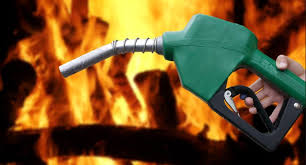
This week I asked everyone to regroup on some basic classroom management. It's the time of year when educators are tired and students get restless. That's usually a recipe for problems that might have been avoidable earlier in the year. Small fires in your classroom can turn huge if they are not managed, but how you manage them also matters. There are two ways to handle a fire: you can throw water on it and put it out or you can throw gas on it and watch it explode only to burn itself out. It's not a complicated problem, managing student issues is all in how you choose to put the fire out.

So why does student management always seem more complicated than it has to be? We focus our attention on why students don't do what they should do, or how they make bad choices or react poorly in a given situation. Our attention is on them...the fire. Unfortunately, I think fires (metaphorically) are always going to be a part of education. It's almost like asking, "Why is fire hot?" We teach young people how to govern themselves just as much as we teach curriculum. And I don't know about you, but I certainly caused a few fires myself when I was younger. It's a part of growing up that isn't avoided by most children. Luckily, I had some good people around me that knew how to throw water on my fires. They focused on how to diffuse the situation instead of focusing on why I did what I had done. They took the time to teach me instead of being frustrated by me. But what if they had thrown gas instead? The cost of escalating a bad situation with a student is high. It costs us our ability to connect with the student. It breaks trust. It hinders our ability to teach. While the behavior may 100% be the student's fault, but the price of throwing gas is too high. 

As Spring nears, outside warms up, and our patience thins, please take a second to consider how to make student management simple. Please search for ways to throw water on the small fires. Remember that we are here to teach and lead. And even when your last nerve is tested, consider that the price of gas is still probably too high to pay. 

Friday, February 25, 2022

Productive Paranoia

Doing teacher observations isn't my favorite part of my job. I don't mind talking to teachers about their lessons or even spending time in classrooms, but there's just something about the formality of the process that isn't engaging for me. Many of you, at some point, have had to remind me that I owe you an observation as we get near the deadline for the quarter. And as we are at the deadline for this quarter, I'm rushing to get my observations done. One of the classes I visited this week was Jennifer Edwards's English 3 course. After some silent reading time and breakfast was out of the way, the lesson started with a Ted Talk about fear. Karen Thompson Walker told the true story of a shipwreck that inspired the novel, Moby Dick. (You can listen here) The sailers were over 1,000 miles offshore and had to determine which way to get to safety. Their shortest route led them to Tahiti, however, they feared that the inhabitants there were cannibals. Paralyzed by fear, they took a much longer route, ran out of food and water, and even resorted to cannibalism to stay alive. Fear made them act irrationally and ironically, they became what they feared most.

Fear builds a story in our minds of what we believe is the worst thing that can happen. And while fear can often help us make bad decisions, it's hard to turn off. But there's another option that Walker discussed, Productive Paranoia. Instead of being afraid and doing nothing, productive paranoia means working hard at being ready for what you fear most. Then if it happens, you are as ready as you can be. I had never heard this term before the classroom observation this week, but I don't think I can forget it. In many ways, this is exactly what we have been doing in schools for the past two years. When we reopened, I'll be the first to admit that I told a few people privately that I didn't think it would work. Our threshold for COVID cases was low and our fears that we would all be sick were high. In a lot of ways, we worked exceptionally hard not to let that happen. And it worked. Then we realized how much learning loss and absenteeism our students had. We were afraid that a generation of students would never catch up. We are working hard to engage them and are doing things we have never had to do. And it's starting to work. In my job, I talk with other principals about our fear of a massive teacher shortage. Our fears have made us think about how we appreciate teachers that do a great job and we have advocated for them to be adequately paid for it. They are starting to listen and new ideas about teacher compensation and licensure are getting a lot of attention. I sincerely hope that it works.

"Don't be afraid" is one of those phrases that gets thrown around a lot, but I'm going to try to remove it from my vocabulary. It's ok to be afraid of the worst because sometimes, the worst does happen. But when we can use that fear to be productive in preventing the worst from happening, we become stronger than the fear. I'm not sure if Mrs. Edwards's students got all of that from the lesson that I observed, but I was happy that I showed up that day. I think I learned a lot.

Friday, February 18, 2022

Camouflage and Banned Books

On Thursday I had a conversation with Mrs. Whitson that made me realize how important it is to be explicit about the things that we teach kids. Not the things that you find in standards or pacing guides, but the things that (if we're being honest) really matter. I'm all for getting kids to learn curriculum, but the act of knowing it isn't what is really important. Hopefully, that curriculum unlocks an interest for students and they use that interest to go for a career. But if we are being honest, the vast majority of curriculum that we teach will never be used again in their professional career. What students really learn is how to work, manage tasks, communicate, think and evaluate. But if we do a good job, we teach them how to be good people along the way. 

There's a recent trend for parents to be pretty critical about the subject and language of the books that students read. Young adult novels often contain more adult language and themes of conflict and other topics that cause students to grapple with the dark parts of human nature. Some parents don't want their children exposed to that and as a result, school districts are updating policies on how to evaluate books that are appropriate. When Mrs. Whitson and I spoke about this, she hit me with a great question: Why is it wrong for students to understand a topic without it being something that they don't have to experience personally? Basically, what we are talking about is empathy. These books are having students empathize with a character or subject in a novel that is experiencing a difficult problem. And while we hope that the students don't encounter that problem personally, it's not a bad thing for them to consider the emotions and conflicts of a person that does. Understanding the novels means learning empathy. 

This week we joined a lot of other schools throughout our state to wear camouflage in memory and support of four students that passed away at East Carteret High School. I don't know of anyone on our staff that knew the students personally, so for us, the issue doesn't affect us directly. But what's the big deal about wearing camo? Does it really do anything for the victims families or friends? Unless we share pictures of us, they would likely never know. But the act teaches students, even if for just a few moments, to consider how someone else feels. To consider their loss. And to put someone else's feelings before their own. In a world that seems consumed with "me, me, me" I think we need a lot more of this. If you didn't take the time to explain the issue or reason why to students this week, there will certainly be other opportunities in the future. Look for chances to teach empathy. And while it may never be tested in your curriculum, I promise you'll produce better students every time. 

Friday, February 11, 2022

Requiem for a Fight

Unless you've been under a rock this week, you know that we had a large fight and two other "incidents" that followed at the basketball game on Tuesday night. When something like this happens, I always struggle with the perception that it places on our school, our staff, our students, our community, and on me. To sum it up, it's embarrassing. After the gym was mostly cleared of fans and the game resumed, I sat on the empty side of the gym at center court alone. What could I have done differently? What will I have to change as a result? What will I need to do tomorrow for the students and parents involved? All of these thoughts swirled in my head like a tight fishbowl. I take it very personally when something like that happens. I guess that's why I jump in to stop it in the first place. It's our image and it's my job to protect it. 

But if you think Tuesday night was tough, you wanted no part of my Wednesday. That's when I have to make decisions and judgments to clean up the mess. And you can absolutely believe that on my best day, I'll never come close to pleasing most of the people involved. The people directly involved claim very little and people with nothing to do with it bring you a lot of unsolicited answers. By 5:00 pm I had made my decisions, spoken with students and parents, relayed information to my boss, listened to the rebuttals, and decided to leave things as I had them. I like to reflect on big events like this and I had a hard time getting it out of my head that night. I remembered sitting there on that bleacher alone. I wasn't there more than a few minutes before I was joined by Mrs. Willis, then Coach Bryant, then several others. I thought back to the staff members that needed no directions to step up and hold our student section still until they knew that we could get them out safely. I thought about the several that looked for my daughter in the chaos and made sure that she was taken care of. I was never alone. 

And while events like this give fodder to those that choose to gossip, throw stones, or try their hand at being keyboard bullies, it doesn't define who we are. The number of kids doing great things outnumbers the bad on even our worst days. In the words of Sarah Gray (a Greene Central graduate and educator), "Wrong is wrong, and believe it or not 9 times out of 10 our students own their wrongdoing. But I, along with lots of others, see all the good they do, too, every single day. All the times they get it right. All the battles they face and overcome, all the time, that people know nothing about." 

It's always fun to celebrate the accomplishments and the good times, but it's the bad times that show everyone what you're made of. Thanks for being right by my side in this bad time, and thanks even more for defending what we truly are.